Music
Angela Schanelec
This modern adaptation of the Oedipus myth takes us from Greece to Berlin, from the 1980s to the present day. Abandoned at birth, Jon is found one stormy night in the Greek mountains and adopted. As an adult, he meets Iro, a warden at the prison where he is held after a tragic accident. Iro seems to seek out his presence; she looks after him and records music for him. Jon’s eyesight begins to fail. From now on, for every loss he suffers, he gains something in return and his life becomes richer.
The film elliptically circumnavigates the themes of birth, love, pain and healing, which are treated like musical motifs. Music is the film’s second most important element, most of it Baroque – Bach, Monteverdi and Pergolesi. The compositions speak to each other and to us, like a mediator of the question: »What can come from pain?« For Jon, music becomes a means of expression. Mastering it like a language enables him to survive, unlike Oedipus. The fact that the characters have hardly any dialogue amplifies the impact of the music. Schanelec’s performers play in highly formalistic manner against the rugged backdrop of the Peloponnese, in poetically composed tableaus. She draws on the Oedipus myth as the constituent building block of Western mainstream cinema. Since the trauma can no longer be traced back to the death of the mother, she reclaims the freedom of character development and releases her cinema from any psychoanalytical logic.
Guest: Agathe Bonitzer (actress)
Awards for ›Music‹
Silberner Bär Bestes Drehbuch – Berlinale 2023
Angela Schanelec
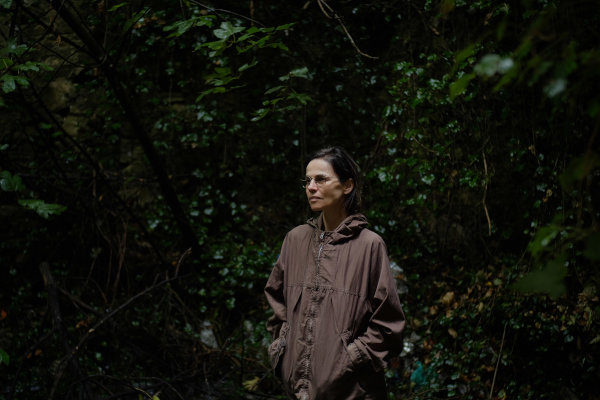
Angela Schanelec wurde 1962 in Aalen geboren. Nach dem Debüt als Hauptdarstellerin in dem Historienfilm Der Tod des weißen Pferdes (1985) folgten Engagements am Thalia Theater Hamburg, der Berliner Schaubühne und dem Schauspielhaus Bochum. 1990–1995 Regiestudium an der Deutschen Film- und Fernsehakademie Berlin (DFFB). Ihr Abschlussfilm Das Glück meiner Schwester erhielt 1996 den Preis der deutschen Filmkritik als Bester Film. Sie avancierte zur wichtigsten Regisseurin der sogenannten Berliner Schule. In ihren Filmen ist das Schweigen so wichtig wie die Dialoge. Schanelec lehrt an der Hochschule für Bildende Künste (HfBK) in Hamburg und übersetzte einige Shakespeare-Stücke ins Deutsche. Ich war zuhause, aber … erhielt 2019 den Silbernen Bären der Berlinale für die beste Regie
Filme von Angela Schanelec
Ich war zu Hause, aber … 2019 | Der traumhafte Weg 2016 | Ponts de Sarajevo 2014 | Orly 2010 | Deutschland ’09 – 13 kurze Filme zur Lage der Nation 2009 | Erster Tag 2009 | Nachmittag 2007 | Marseille 2004 | Mein langsames Leben 2001 | Plätze in Städten 1998 | Das Glück meiner Schwester 1995 | Ich bin den Sommer über in Berlin geblieben 1993 | Über das Entgegenkommen 1992 | Prag, März 1992 1992 | Weit entfernt 1992 | Schöne gelbe Farbe 1991