»My way of looking at what is happening in Turkey is the perspective of a German-Turkish woman, and that is also the perspective that will form the basis of this talk. We all grew up here, attended German schools, and this is where our socialization took place. The understanding we have that we are due certain rights – whether freedom of opinion, expression, civil rights – has influenced the way we think and act. This is something that differentiates us from the same generation in Turkey, which doesn’t have this same understanding. How do we German Turks look at Turkey as a homeland that has left behind traces in our lives, our upbringing, the paths we have taken in life, our family histories? These traces have been shaped by the notion, by our parents’ dreams of a homeland that is no longer ours. Since the events in Gezi Park, a new generation in Turkey is demanding rights that are normal for us. We German Turks look at this movement in Turkey with a kind of longing for our homeland, which is marked by affinity and memories. The women who will be talking to me are women who – in their work as journalists, authors, filmmakers and politicians – will be discussing and putting up for discussion their personal view of Turkey.«
– Aysun Bademsoy
»Although Turkey has never been a role model for democracy and human rights, I have been observing the developments there for the past eleven years with a great deal of worry. The extensive state interference in private life, an increasingly dictatorial government, censorship and corruption were practically an invitation to the Gezi protests to happen. The movement came perhaps too late, but it still constitutes an enormous gain for the Turkish people: there is finally some tolerance for those who think differently, believe differently and have a different ethnic background!«
– Can Erdoğan-Sus
»Summer 2013 in Istanbul: I met people from Istanbul who were impressed about the fever that a city can develop when the population is fed up to its back teeth. When the wrath of an East Anatolian mixes with the hot temper of a Black Sea Turk, with the energy of students and the self-confidence of an old Armenian woman. When these people managed to shake up a country within a few days together, then they were all proud to be Istanbulites. But happiness, they know, is something else.«
– Mely Kiyak
»My understanding of homeland follows Bloch’s philosophy. He writes in The Principle of Hope: »If (an individual) has grasped himself and established what is his, without exploitation and alienation in real democracy, there arises in the world something which shines into the childhood of all and in which no one has yet been: homeland.« This understanding of homeland is where the principle of hope can be found and it is not bound to any particular time or place. I share this view: we are not born in a homeland, far more we create a homeland for ourselves through our encounter with the world. And when we succeed in the sense Bloch alluded to, the world becomes our homeland. Seen in this way, the Gezi unrest has become the homeland of the democratic movement in Turkey and, seen in a broader sense, it has become a homeland for all democrats.”
– Dr. Lale Akgün
Lale Akgün
Dr. Lale Akgün, 1953 in Istanbul geboren, kam mit neun Jahren nach Deutschland. Seit über 30 Jahren lebt sie in Köln. Dort studierte sie Medizin und Psychologie, arbeitete zunächst in der Jugendhilfe und promovierte von 1984 bis 1987 im Bereich Ethnopsychologie. Dr. Lale Akgün ist außerdem approbierte Psychotherapeutin, war Lehrbeauftragte für Interkulturelle Bildung an der Universität Köln und baute 1997 und als Leiterin das Landeszentrum für Zuwanderung (LzZ) auf. Es beriet die Landesregierung NRW zu Fragen der Migration / Integration und Zuwanderung.
Seit 1980 ist sie deutsche Staatsangehörige. 1982 trat sie in die SPD ein, von 2002 bis 2009 war sie Mitglied des Deutschen Bundestages. Sie war stellvertretende europapolitische und stellv. migrationspolitische Sprecherin sowie Islambeauftragte der SPD-Bundestagsfraktion. Nach ihrer Mandatszeit wechselte sie in die Staatskanzlei NRW und ist dort seit März 2013 Leiterin der Stabstelle »Fairer Handel und nachhaltige Beschaffung«. Lale Akgün ist Trägerin des Verdienstordens der Bundesrepublik Deutschland und Trägerin des Giesberts-Lewin-Preises. Sie hat zahlreiche Artikel und Bücher zu dem Themenkreis Einwanderung, Integration und Interkulturalität veröffentlicht. 2008 erschien ihr Bestseller Tante Semra im Leberkäseland. Es folgten Der getürkte Reichstag (2010) und Der Aufstand der Kopftuchmädchen (2011), das der Frage nach einem aufgeklärten Islam nachgeht. 2011 erschien Kebab Weihnacht, das für die Versöhnung der
Religionen eintritt.
Aysun Bademsoy
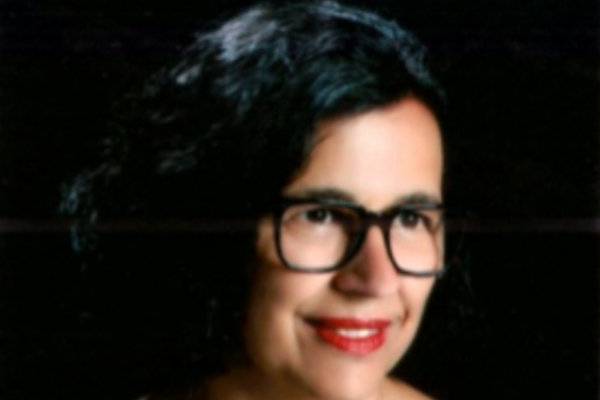
Aysun Bademsoy wurde 1960 in Mersin geboren und zog mit neun Jahren nach Berlin, wo sie bis heute lebt. Erste Begegnungen beim Film machte sie als Schauspielerin, nahm aber gleichzeitig ein Studium der Theaterwissenschaft und Publizistik an der Freien Universität auf. Sie umgab sich mit DFFB-Studierenden und übernahm Schnitt- oder Regieassistenzen. Für ihren ersten Dokumentarfilm arbeitete sie mit Jugendlichen, deren migrantische Perspektive einen Blickwechsel auf gesellschaftliche Verhältnisse der BRD werfen sollte. Unterschiedliche Lebensrealitäten in Berlin tauchen immer wieder in ihren beobachtenden Dokumentarfilmen auf, aber auch der Gegenschuss auf Menschen in der Türkei, die Deutschland wieder verlassen haben. Ihre Filme liefen auf zahlreichen internationalen Festivals. Seit 2024 kümmert sich die Deutsche Kinemathek um die Sicherung und somit die digitale Restaurierung ihres Werkes.
Filme von Aysun Bademsoy (Auswahl)
Spuren – Die Opfer des NSU 2019 |Zyklop 2016 | Ehre 2011 | Am Rand der Städte 2005 | Ich gehe jetzt rein 2008 | Die Hochzeitsfabrik 2005 | Deutsche Polizisten 1999 | Nach dem Spiel 1997 | Ein Mädchen im Ring 1996 | Mädchen am Ball 1995 | Fremde Kinder 1994 | Detektei Furkan 1990 | Fremde deutsche Nachbarschaft 1989
Can Erdoğan-Sus
Can Erdoğan-Sus wurde 1979 in der Türkei geboren. Dort wuchs sie auf und absolvierte ein Studium an der Musikhochschule Eskişehir im Fach klassisches Klavier. Im Jahr 2000 zog sie nach Deutschland, wo sie an der Hochschule für Musik Karlsruhe studierte. Anschließend studierte sie Sounddesign und Filmkomposition an der Filmakademie Baden-Württemberg. Sie komponierte Musik für Kinofilme wie Kuzu, Habib Rhapsody, Der Turm, Die Unsichtbare. 2013 beteiligte sie sich als Komponistin und musikalische Direktorin an einem in Istanbul entstandenen Musiktheater namens »Taksim Square« über die Gezi-Proteste. Die Premiere fand an der Neuköllner Oper Berlin statt. Seit 2006 lebt und arbeitet sie in Berlin als Filmkomponistin und Klavierpädagogin.
Mely Kiyak
Mely Kiyak is the author of numerous books, anthologies and she writes for various supraregional media. Before becoming a commentator at Maxim Gorki Theater, she worked for many years as a politics columnist for Germay dailies Frankfurter Rundschau and Berliner Zeitung. Mely Kiyak has been the initiator of many different initiatives to generate dialogue between those active in the cultural sector in Europe. In May, together with the authors Antje Ràvic Strubel, Nicol Ljubic and Tilman Spengler, she will be inviting visitors to the 2014 European writers’ conference »Europa. Traum und Wirklichkeit« (Europe. Dream and Reality) in collaboration with Frank-Walter Steinmeier in Berlin. In the Kurdish-speaking Diyarbakır she is also opening the temporary gallery Kültür Dükkanı from summer 2014 to the end of 2015 in collaboration with the artists who live there and who exhibit internationally − Şener Özmen, Cengiz Tekin, Berat Işık and Lal Laleş. There they will be asking the following question on site for one year: 100 years of genocide, expulsion and wars. What roles do artists play in these conflicts and »How do we live?«